
Glass Bottles and Jars
Empty it. Dry it.
Bring it in.
Empty glass bottles and jars belong at RecycleOn Centers. Pour out liquids and food; labels can stay.
Rule of Thumb
-
Empty & dry No liquids or food left inside
-
Bottle or jar Container glass only
-
Labels can stay Remove lids and caps first
Recycle it here
Keep it out
Sorting, at a Glance
What Goes In, What Stays Out
Container shape matters more than color. Empty glass bottles and jars in clear, brown or green are in. Drinkware, windows, cookware and specialty glass stay out.
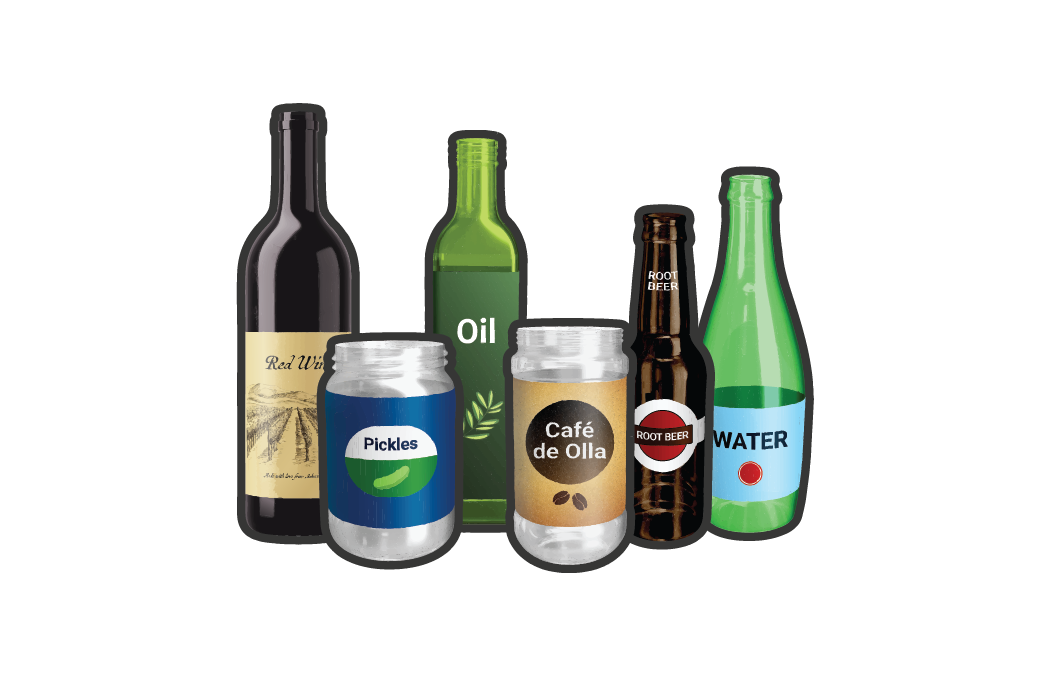
Yes – bring these in
- Glass beverage bottles
- Glass food jars
- Wine bottles
- Beer bottles
- Liquor bottles
- Pasta sauce jars
- Salsa jars
- Jam and jelly jars
- Pickle jars
- Baby food jars
- Clear, brown and green glass containers
- Glass bottles and jars with labels still attached
- Glass cosmetic containers
No – keep these out
- Drinking glasses
- Ceramics, dishes and pottery
- Window glass
- Mirrors
- Pyrex® and other oven-safe glass
- Light bulbs
- Fluorescent tubes
- Glass cookware
- Crystal
- Aquariums or fish tanks
- Auto glass
- Glass tabletops or furniture glass
- Lids and caps (remove and recycle separately)
Frequently Asked Questions
More detail on why these rules exist, what happens to your recycling and how the law defines accepted materials.
Why bring glass here if some communities collect it curbside?
Some communities collect glass bottles and jars in a separate glass recycling bin. However, not all communities offer curbside glass collection. Many RecycleOn Centers collect glass bottles and jars, expanding access to glass recycling across the state.
How clean does the glass need to be?
Empty out the containers and shake out any leftover liquid.
Do I need to remove the labels?
Labels can be left on.
Which glass colors are accepted?
All colors of glass bottles and jars are accepted.
What should I do with lids and caps?
Remove lids, caps and corks before recycling. You can put metal lids and caps inside a metal can with the top crimped shut and recycle them curbside. RecycleOn Centers accept plastic caps.
Why aren't drinking glasses, windows and cookware accepted?
Non-packaging glass, like drinking glasses, picture frames and cookware, is made of a different type of glass that melts at a different temperature than bottles and jars. When mixed together, these different glass types can damage the recycling process.
What happens after I drop it off?
After collection, the glass is cleaned, sorted by color, crushed into small pieces called cullet and used to make new bottles and jars. It can also be used in construction materials, fiberglass insulation, sandblasting media and other products.
What does the law say?
Looking to learn more about exactly what is recyclable? Below is how the law defines these materials.
“ Glass bottles and jars” – the law doesn’t provide a deeper definition.